
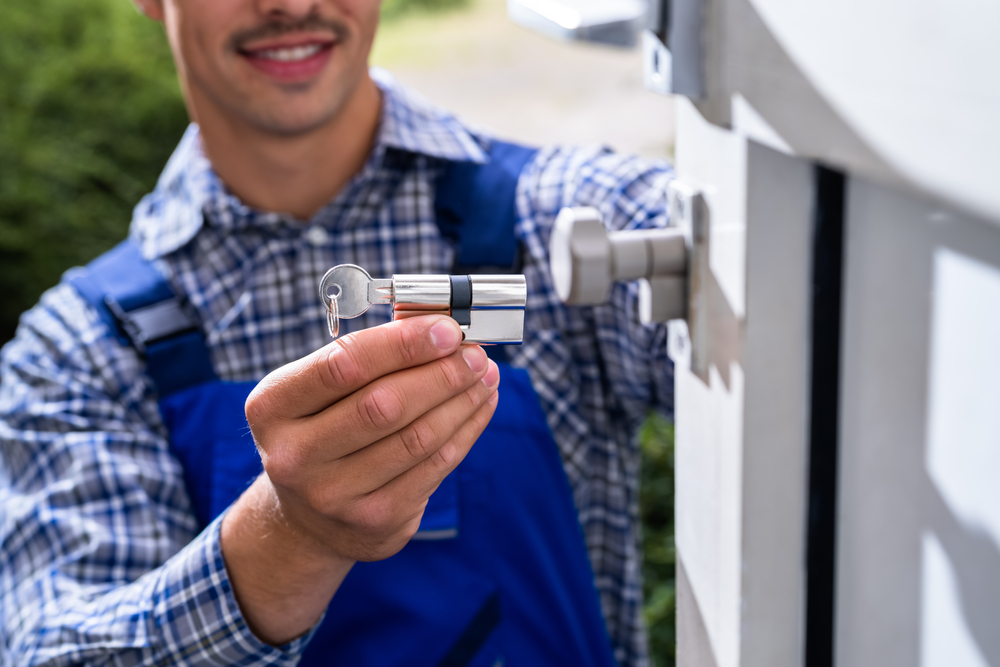
From historic homes and multifamily properties to storefronts and offices, Haverhill has a wide mix of buildings with very different security needs. A lock or access setup that works well for a newer property may not be the right choice for an older door, a busy commercial entrance, or a building where multiple people need access.
The five most useful security upgrades for local property owners are stronger door hardware, controlled key systems, improved commercial access control, better protection for secondary entrances, and a professional security assessment. The right combination depends on the building, who needs access, and the condition of the existing doors and locks.
What local property owners should know
-
A strong lock cannot compensate for a damaged door, loose frame, or weak strike area.
-
Older properties may require security improvements that work with existing doors rather than a simple hardware swap.
-
Downtown businesses and mixed-use properties can benefit from tighter control over who has keys and when access should be changed.
-
Secondary doors, side entrances, storage areas, and interior access points deserve the same attention as the main entrance.
-
Rekeying or changing access after tenant, employee, or ownership changes can help prevent old credentials from remaining useful.
Why Do Security Upgrades Matter for Haverhill Properties?
Security upgrades matter in Haverhill because the city includes historic structures, dense urban neighborhoods, commercial districts, residential villages, industrial areas, and a redeveloping downtown. That variety means there is no single lock or access solution that makes sense for every local home or business.
The City of Haverhill describes the community as geographically diverse, with farming areas, dense neighborhoods, commercial and residential villages, and a busy downtown. The city also has a long history dating to the 1600s, and its Historical Commission specifically works to preserve historic structures and neighborhoods.
That matters for security planning. A historic residential door near downtown can present different hardware challenges than a modern commercial entrance, while a multifamily building in Mount Washington may have different access concerns than a business along Merrimack Street.
Chelmsford Lock & Key, Inc. can help property owners evaluate those differences. We focus on matching locks and related security solutions to the actual door, building, and access needs rather than treating every property the same way.
1. Upgrade Exterior Door Locks and Hardware
Upgrading exterior door locks and hardware means looking beyond the lock itself and making sure the entire entry point provides dependable protection. A quality lock works best when the door, frame, strike area, hinges, and associated hardware are all in suitable condition.
This is particularly relevant in a community with an established housing stock and protected historic structures. An older door may have wear, previous hardware modifications, alignment problems, or openings that do not match newer hardware.
Homeowners should inspect exterior doors for:
-
Loose or shifting lock hardware
-
Difficulty fully closing or latching the door
-
Excessive movement when the door is closed
-
Damaged frames or strike areas
-
Keys that stick or require unusual force
-
Locks that no longer operate consistently
For businesses, the same inspection should include employee entrances, rear doors, storage areas, and other exterior access points.
2. Consider Rekeying and Better Key Control
Better key control limits uncertainty about who can still enter a property, making rekeying an important upgrade after occupancy, staffing, or access changes. If you do not know how many copies of a key exist or who still possesses them, reviewing the locks can restore control without assuming every situation requires the same solution.
This can be useful for rental and multifamily properties as well as businesses with employee turnover. Haverhill’s planning documents identify mixed residential and commercial areas around locations such as South Main Street and Bradford Avenue, Washington Street and High Street, and several other neighborhood centers.
Common times to review key control include:
-
Moving into a previously occupied home
-
Taking over a commercial space
-
Changing tenants
-
Losing a key
-
Experiencing employee turnover
-
Discovering unaccounted-for key copies
-
Changing who should have access to restricted areas
For commercial properties, a structured keying approach can also reduce the number of keys certain authorized users need while keeping sensitive areas restricted.
3. Improve Commercial Access Control
Commercial access control gives Haverhill businesses a more manageable way to decide who can enter particular areas and helps reduce dependence on uncontrolled physical key copies. The appropriate solution can range from better organized locking hardware to electronic access systems, depending on the property and operational requirements.
Downtown is especially relevant as commercial activity and redevelopment continue around Merrimack Street and the riverfront. City planning describes uses in the area that include retail, offices, restaurants, housing, and other development.
For an area business, access planning might distinguish among:
-
Customer entrances
-
Employee-only doors
-
Management offices
-
Stockrooms
-
Utility or maintenance spaces
-
Rear delivery entrances
-
Shared building areas
The goal is not simply adding more locks. It is creating sensible access levels so the people who need entry have it without unnecessarily extending access to everyone else.
4. Secure Side, Rear, and Secondary Entrances
Secondary entrances should receive the same security review as the front door because an overlooked side, rear, basement, or service entrance can weaken an otherwise well-secured property. Property owners often focus first on the entrance they use most, but security is only as consistent as the building’s other accessible openings.
For a home, review basement entries, attached garage doors, side doors, and less frequently used exterior doors. For a business, include loading areas, employee doors, storage rooms, and rear entrances.
This is particularly useful for mixed-use and commercial buildings where several entrances may serve different purposes. Downtown properties, neighborhood businesses, and larger facilities can all have access points that receive less daily attention than their primary entrance.
Check whether each door closes completely, latches reliably, locks as intended, and is still appropriate for how the space is currently used.
5. Schedule a Professional Lock and Security Assessment
A professional security assessment helps identify weak hardware, poor door alignment, outdated access arrangements, and other issues that may be easy to overlook during a basic visual check. It can also help determine which existing components remain serviceable and which upgrades would provide meaningful improvement.
This is especially valuable before spending money on individual products. Replacing a lock without identifying a door or frame problem may leave the underlying weakness unresolved.
Haverhill’s varied properties make an individualized assessment useful. The city’s housing ranges from older inner-city properties to village-style neighborhoods, while its commercial footprint includes a central business district and multiple industrial parks.
What Warning Signs Suggest Your Security Needs an Upgrade?
Security may need attention when locks become unreliable, access is difficult to control, or doors no longer close and secure properly. These issues can develop gradually, so property owners should not wait for complete lock failure before evaluating an entrance.
Watch for these warning signs:
-
A key is difficult to insert or turn.
-
A door must be pushed, pulled, or lifted before it locks.
-
The lock or handle feels loose.
-
You cannot account for all existing key copies.
-
Former employees, tenants, contractors, or occupants may still have keys.
-
Exterior door hardware is visibly damaged or worn.
-
A secondary entrance has weaker hardware than the main entrance.
-
Your current access arrangement no longer fits how the building is used.
When Should You Call a Locksmith?
You should call a locksmith when a security problem involves unreliable locks, uncertain key control, damaged hardware, recurring door-lock alignment issues, or a need to change who can access the property. Simple visual inspections are appropriate for owners, but lock repair, rekeying, replacement, and access planning are better evaluated professionally.
If a door suddenly stops locking, a key breaks, or access credentials are lost or compromised, address the issue promptly. For routine improvements, an assessment can help prioritize work instead of replacing hardware unnecessarily.
For building or renovation work that extends beyond locksmith services, property owners should also verify applicable requirements with the appropriate local authorities. Haverhill’s Inspectional Services Department oversees enforcement of building, wiring, plumbing, gas, health, and environmental regulations.
What Common Local Conditions Affect Locks and Doors?
Common local conditions affecting locks and doors include older building components, seasonal temperature changes, frequent use, property turnover, and changing commercial access needs. Each can affect how reliably a door closes, how hardware operates, or whether an existing key system still makes sense.
New England’s seasonal temperature swings can expose alignment problems as doors and frames move slightly with changing conditions. Older buildings may also have hardware that has been repaired or replaced multiple times.
Usage matters too. A residential front door may operate several times each day, while a busy commercial entrance can see far more cycles. Over time, loose hardware and worn components deserve attention before they become larger access problems.
How Can Haverhill Property Owners Maintain Better Security?
Haverhill property owners can maintain better security by checking locks and doors seasonally, controlling key distribution, addressing sticking or loose hardware early, and reviewing access whenever occupants or employees change. Consistent maintenance is usually more useful than waiting until a lock stops working entirely.
A practical routine includes checking exterior entrances in spring and fall, testing seldom-used doors, confirming keys operate smoothly, and making sure doors latch without unusual force.
Business owners should also maintain an accurate record of who receives keys or other credentials. When staffing or tenant access changes, review whether existing access should be removed or modified.
What Results Should You Expect From a Security Upgrade?
A well-planned security upgrade should provide more reliable locking, clearer access control, easier day-to-day operation, and fewer uncertainties about who can enter. The exact result depends on the existing doors, hardware condition, building use, and security solution selected.
For homeowners, that might mean dependable exterior locks and confidence that old keys no longer work after rekeying. For businesses, it could mean separating public, employee, management, and restricted access more effectively.
The objective is practical improvement suited to the property, not unnecessary complexity.
What Security Upgrade Mistakes Should You Avoid?
The most common security upgrade mistakes are focusing only on the lock, ignoring secondary doors, and choosing hardware without considering how the property is actually used. These shortcuts can result in money being spent without addressing the underlying access problem.
Mistake: Installing stronger hardware on a damaged or poorly aligned door.
Consequence: The entry may remain unreliable.
Better approach: Evaluate the door, frame, lock, and strike area together.
Mistake: Keeping the same key access after significant occupancy or staffing changes.
Consequence: You may not know who can still enter.
Better approach: Review whether rekeying or another access change is appropriate.
Mistake: Upgrading only the main entrance.
Consequence: Side and rear entrances may remain comparatively weak.
Better approach: Assess all accessible exterior doors.
A Common Local Security Scenario
A common Haverhill scenario is an owner moving into an older property and discovering that several doors use different keys, some locks are difficult to operate, and nobody knows how many previous key copies exist. This is a representative scenario, not a specific customer case study.
Rather than automatically replacing everything, a locksmith can evaluate the existing locks and doors, identify which hardware remains suitable, discuss rekeying or replacement where appropriate, and help create a more manageable access arrangement.
The same principle applies when a local business changes tenants or employees.
Which Locksmith Services Support These Upgrades?
Locksmith services can support these upgrades through lock evaluation, rekeying, lock replacement, key-control planning, commercial locking solutions, and appropriate access improvements. The exact services needed should be based on the property rather than a predetermined package.
We can help local homeowners and businesses determine whether an issue calls for repair, rekeying, replacement, or a broader review of the property’s access points.
How Do You Compare Your Security Upgrade Options?
The best security option balances the condition of the existing hardware, the level of access control needed, and how the building is used. Rekeying can make sense when suitable locks remain in place but key control has been lost, while replacement may be more appropriate for damaged, unsuitable, or unreliable hardware.
DIY visual checks are useful for spotting loose components or identifying doors that do not latch correctly. Professional service is appropriate when the lock needs repair or modification, when access must be changed, or when several entrances need to work as a coordinated system.
Where Can Local Property Owners Request Service?
Property owners in Haverhill and surrounding Merrimack Valley communities can consider professional locksmith service when they need better control over residential or commercial access. Nearby communities such as Bradford, Groveland, and other area locations may have similarly varied residential and commercial property needs.
We recommend confirming service availability for your specific address when scheduling.
What Can Happen If Security Problems Are Ignored?
Ignoring security problems can turn minor hardware or access-control concerns into inconvenient lockouts, unreliable entrances, or uncertainty about who has access. For businesses, a malfunctioning entrance can also interfere with opening, closing, deliveries, employee access, or normal operations.
A lock that occasionally sticks or a door that requires extra force may seem manageable, but recurring problems deserve evaluation. Addressing them early gives property owners more time to choose an appropriate solution rather than reacting after access becomes difficult.
FAQ
What are the most important security upgrades for a Haverhill home?
The most important upgrades are reliable exterior locks, secure door and frame hardware, controlled key access, properly protected secondary entrances, and a professional assessment when existing hardware is questionable. Older homes in Haverhill may require solutions suited to existing doors rather than simply installing a new lock without evaluating the full entry.
Should I rekey my locks after buying a home in Haverhill?
Yes, rekeying is worth considering when you take possession of a previously occupied home and cannot account for every existing key. Rekeying can change which keys operate compatible existing locks without necessarily replacing all of the hardware. A locksmith can determine whether the current locks are suitable for that approach.
Do older Haverhill homes need special lock considerations?
Older homes can require additional attention because doors, frames, and existing hardware may have been modified or repaired over many years. Haverhill has a significant historic character, so evaluating the condition and fit of an existing entry is important before choosing replacement hardware.
What security upgrades make sense for downtown Haverhill businesses?
Downtown businesses should consider dependable exterior hardware, controlled employee access, protection for rear and service entrances, and a clear plan for keys or credentials. With retail, restaurant, office, residential, and other uses present in the downtown and Merrimack Street area, access requirements can vary substantially by property.
How often should local businesses review who has keys?
Businesses should review key access whenever staffing, management, tenancy, contractors, or operating procedures change. A periodic review can also identify keys that were never returned or credentials that are no longer necessary. The right schedule depends on employee turnover, the number of users, and the sensitivity of restricted areas.
Should I replace a lock that is difficult to turn?
A difficult lock should be inspected, but replacement is not automatically necessary. The problem may involve the lock, key, door alignment, frame, or another hardware component. If the issue keeps returning, professional evaluation can identify the cause rather than assuming lubrication or a new lock will solve it.
Are secondary entrances as important as the front door?
Yes, secondary entrances should be included in the same security review as the main door. Side doors, rear commercial entrances, basement doors, attached garage entries, and service doors may receive less attention even though they still provide property access. Each should close, latch, and lock reliably.
Can Haverhill businesses use access control instead of traditional keys?
Access control may be appropriate for businesses that need more structured management of employee or restricted-area entry. The right system depends on the building, number of users, entrances, and operational requirements. A professional assessment can help determine whether traditional keyed hardware, a more organized key system, or electronic access is the better fit.
Protect Your Haverhill Property With Smarter Access
Good security starts with dependable doors, locks, and a clear understanding of who should have access. Whether you are maintaining an older home, managing a multifamily property, or operating a local business, we can help you identify practical security improvements suited to the property.
Build a More Secure Home or Business
Get clear recommendations based on your doors, locks, and access needs rather than a one-size-fits-all solution.