
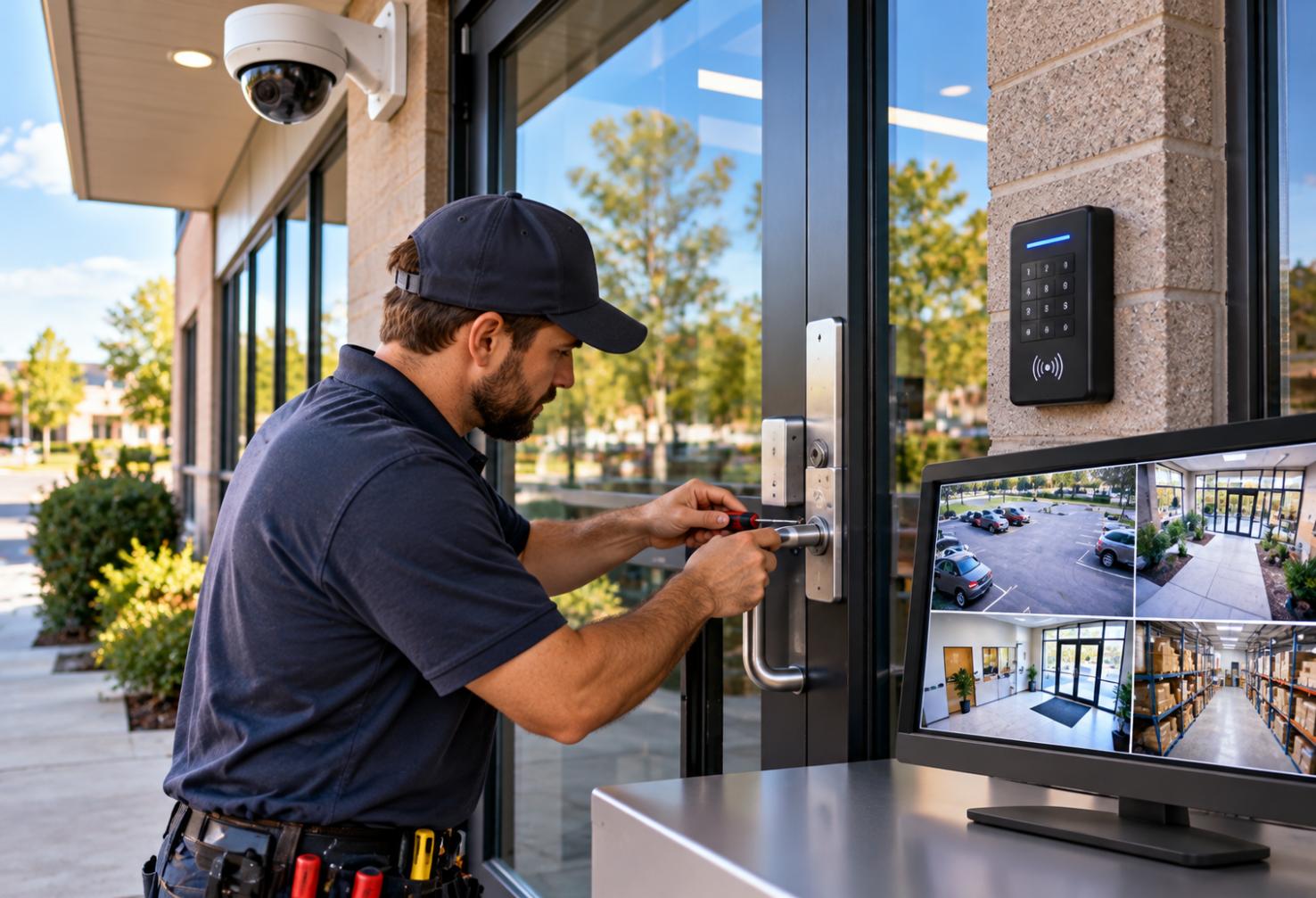
Running a business in Haverhill, MA, means protecting more than your building. Your inventory, equipment, employees, customer information, and daily operations all depend on reliable security. Whether you operate a storefront downtown, manage an office near the Merrimack River, or oversee a commercial property along Route 125, the right security measures can help prevent unauthorized access and costly interruptions.
Commercial security is not limited to installing stronger locks. Modern businesses can benefit from a combination of high-security locks, access control systems, master key systems, door hardware upgrades, and regular security assessments. Understanding these five solutions can help local business owners choose practical protection based on their building, operating hours, and access needs.
What Haverhill business owners should know
-
High-security locks can improve resistance to unauthorized key duplication and certain physical attacks.
-
Access control systems help businesses manage who enters specific areas and when.
-
Master key systems simplify authorized access across offices, storage rooms, and multiple commercial spaces.
-
Commercial door hardware must balance security with safe, code-compliant emergency exits.
-
Routine inspections can reveal worn locks, damaged door components, and security weaknesses before they cause operational problems.
Commercial properties throughout Essex County face different security challenges depending on their layout, age, and daily activity. Older downtown buildings may have aging door hardware, while newer retail and industrial facilities may require more advanced access management.
At Chelmsford Lock & Key, Inc., we understand the importance of choosing commercial locksmith solutions that support both security and everyday business operations. Below are five options worth considering for your property.
1. High-Security Locks for Stronger Business Protection
High-security locks provide enhanced protection against unauthorized entry through features such as restricted keyways, controlled key duplication, and more resistant locking mechanisms. For Haverhill businesses that store valuable inventory, sensitive documents, or specialized equipment, these locks can provide an additional layer of physical security.
Standard commercial locks may be sufficient for some interior doors, but entrances and restricted areas often deserve closer attention.
High-security locks are particularly useful for:
-
Retail storefronts with valuable merchandise.
-
Offices containing confidential business records.
-
Warehouses and commercial storage facilities.
-
Employee-only rooms and equipment areas.
-
Businesses with frequent staffing changes.
Why High-Security Locks Matter Locally
Downtown Haverhill includes older commercial buildings where doors, frames, and locking hardware may have been modified over time. Even a quality lock can provide limited protection if the surrounding door hardware is damaged or improperly aligned.
Cold New England winters also create challenges. Seasonal temperature changes can affect door alignment, making locks harder to operate and increasing wear on hardware.
A professional commercial locksmith can evaluate the complete door assembly and recommend appropriate locking solutions.
2. Access Control Systems for Managing Employee Entry
Access control systems allow business owners to manage building entry using credentials such as key cards, fobs, PIN codes, or compatible mobile devices. These systems can reduce dependence on traditional keys and make it easier to change access permissions when employees join, leave, or change responsibilities.
For businesses with multiple employees or restricted areas, electronic access management can be especially useful.
How Access Control Helps Haverhill Businesses
Consider a professional office near Washington Street with several employees, shared workspaces, and rooms containing confidential records.
Instead of distributing keys to every employee, an access control system may allow management to assign different permissions based on job responsibilities.
Depending on the system, useful features may include:
-
Scheduled access during designated business hours.
-
Individual credentials for employees.
-
Access permissions for specific doors or departments.
-
Entry activity records.
-
Credential deactivation without replacing physical locks.
Businesses around the Ward Hill industrial area may also benefit from controlled access to warehouses, equipment rooms, and employee entrances.
What to Consider Before Installation
Not every building requires an advanced electronic security system. Property owners should consider the number of entrances, employee turnover, electrical requirements, emergency egress, and compatibility with existing door hardware.
Some systems also require ongoing software management, backup power planning, or network maintenance.
A commercial security assessment can help determine whether electronic access control offers practical advantages over traditional locking systems.
3. Master Key Systems for Convenient, Controlled Access
A master key system allows designated keys to open multiple locks while other keys provide access only to assigned doors. This arrangement helps business owners, property managers, and authorized supervisors manage commercial spaces without carrying a separate key for every entrance.
Master key systems are especially useful in multi-office buildings, retail properties, and facilities with several departments.
How a Master Key System Works
Imagine a commercial building in Haverhill with three separate office suites, shared storage, and a maintenance room.
A properly designed system could provide:
-
Individual office keys that open only assigned spaces.
-
Maintenance keys that open designated service areas.
-
Management keys that access multiple authorized areas.
-
A master key that opens locks included in its assigned hierarchy.
This structure can simplify daily operations while maintaining different access levels.
Why Proper Key Management Matters
A master key system is only as effective as its design and administration.
Poorly documented key distribution, unrestricted duplication, and missing keys can create security problems over time. Business owners should maintain accurate key records and establish procedures for issuing and recovering keys.
For commercial properties near Bradford or along Main Street, a carefully planned master key system may be a practical alternative to managing dozens of unrelated locks.
We can help business owners evaluate their existing locking arrangements and identify whether a coordinated key system would better support their access needs.
4. Commercial Door Hardware and Exit Devices for Safer Entrances
Commercial door hardware includes closers, hinges, strikes, locksets, and exit devices that help doors operate securely and safely. Properly selected hardware supports reliable locking, controlled entry, and safe emergency evacuation, making it an essential part of business security.
A strong lock cannot compensate for a door that fails to close, latch, or align properly.
Common Commercial Door Problems
Businesses in Haverhill may encounter issues such as:
-
Exterior doors that do not latch completely.
-
Loose or damaged strike plates.
-
Door closers that shut too quickly or too slowly.
-
Worn hinges that cause doors to sag.
-
Panic hardware that sticks or does not release smoothly.
-
Locks that become difficult to turn during colder weather.
These problems can affect both building security and normal business operations.
Understanding Panic Bars and Emergency Exits
Panic bars, also called panic hardware, are designed to allow occupants to exit through designated doors using a push-operated release mechanism.
Certain commercial occupancies and exit arrangements require specific emergency egress hardware under applicable building and fire codes.
Requirements depend on factors such as building occupancy, occupant load, door function, and the applicable code provisions.
Business owners should avoid adding locks, chains, or other devices that could interfere with required emergency exits.
For older commercial buildings near Haverhill’s downtown district, professional evaluation is particularly valuable when replacing or upgrading existing doors.
5. Commercial Security Assessments and Preventive Lock Maintenance
A commercial security assessment examines doors, locks, keys, and access procedures to identify weaknesses before they lead to unauthorized entry or business disruption. Combined with preventive maintenance, these evaluations help property owners prioritize practical improvements rather than replacing equipment unnecessarily.
For businesses with several entrances or aging hardware, regular inspections can be an effective starting point.
What a Commercial Lock Security Assessment May Include
A locksmith-focused assessment can review:
-
Exterior and interior lock conditions.
-
Door alignment and latch engagement.
-
Key control and duplication procedures.
-
Employee access arrangements.
-
Door closers and exit hardware.
-
Signs of forced entry or tampering.
-
Opportunities for rekeying or hardware upgrades.
A locksmith assessment focuses on physical access and locking hardware. Cameras, alarms, cybersecurity, and broader facility security may require additional specialists.
When Should Local Businesses Schedule Maintenance?
A practical approach is to inspect commercial doors and locks periodically, especially before winter and after periods of heavy use.
Massachusetts freeze-thaw cycles, moisture, and seasonal changes can contribute to door movement and hardware wear.
Business owners should also review their security arrangements after losing keys, changing tenants, experiencing employee turnover, or renovating a commercial space.
Preventive maintenance can help identify small problems before they interfere with building access.
Warning Signs Your Commercial Security Needs Attention
Commercial security warning signs include malfunctioning locks, unreliable door closures, uncontrolled key distribution, and unexplained access problems. Recognizing these issues early gives Haverhill business owners an opportunity to correct vulnerabilities before they disrupt operations.
Watch for these seven signs:
-
Keys are difficult to turn. This may indicate worn cylinders, damaged keys, or misaligned hardware.
-
Doors fail to latch consistently. A door that appears closed may not actually be secured.
-
Former employees still have keys. Unreturned or duplicated keys can create unnecessary access risks.
-
Locks show visible damage. Loose cylinders, damaged strikes, and signs of tampering deserve professional attention.
-
Employees share access credentials. Shared codes or keys make individual access harder to manage.
-
Exit hardware does not operate smoothly. Faulty emergency exit devices may create serious safety concerns.
-
No one knows how many keys exist. Missing key records make access control and security planning more difficult.
If several of these conditions apply to your property, a commercial locksmith evaluation may help identify the most appropriate next steps.
When to Call a Professional Commercial Locksmith
A professional commercial locksmith should be contacted when locks fail, access credentials become unaccounted for, doors cannot be secured reliably, or hardware upgrades involve complex security and safety requirements. Business owners can perform basic visual checks, but installation and modification of critical locking systems require appropriate expertise.
For example, an owner can check whether a storefront door closes and latches during normal operation.
However, a door that repeatedly fails to latch may require professional adjustment, hardware repair, or replacement.
Emergency exit devices and electronically controlled doors deserve particular care because improper modifications can create safety or code compliance problems.
For businesses operating near the Merrimack River or in surrounding Essex County communities, addressing these concerns before a busy operating period can help minimize disruption.
Common Local Causes of Commercial Lock and Door Problems
Commercial lock problems in the Haverhill area commonly arise from seasonal door movement, worn hardware, heavy daily use, and inconsistent key management. The underlying cause determines whether a business needs an adjustment, rekeying, repair, or a more comprehensive security upgrade.
| Common cause | Potential impact | Practical solution |
|---|---|---|
| Winter temperature changes | Door alignment and latching problems | Inspect and adjust affected hardware |
| Frequent customer traffic | Worn locks, hinges, and closers | Schedule periodic hardware maintenance |
| Older commercial doors | Poor hardware fit or unreliable operation | Evaluate door and frame compatibility |
| Employee turnover | Unaccounted-for keys or credentials | Rekey locks or update access permissions |
| Moisture and exposure | Corrosion and reduced hardware performance | Inspect, maintain, or replace affected components |
The right solution should address the cause rather than temporarily masking the symptom.
Preventive Security Maintenance for Haverhill Businesses
Preventive commercial security maintenance involves checking door operation, reviewing key access, inspecting visible hardware, and addressing problems before they become emergencies. A simple seasonal routine can help local businesses maintain dependable access without unnecessary replacements.
A Practical Maintenance Checklist
-
Before winter: Check exterior door alignment, latch operation, and closer performance.
-
During winter: Watch for doors that become difficult to open, close, or lock.
-
In spring: Inspect exterior hardware for moisture-related wear and corrosion.
-
During employee changes: Recover keys, deactivate credentials, and review access permissions.
-
Throughout the year: Check that all required exit devices operate properly.
-
After renovations: Confirm that new doors, frames, and locking hardware work together correctly.
Avoid forcing stiff locks or applying random lubricants without confirming the hardware manufacturer’s recommendations.
A professional should evaluate recurring problems, damaged cylinders, and any door that cannot be secured or opened safely.
Common Mistakes Business Owners Make With Commercial Security
Commercial security mistakes often involve choosing inexpensive hardware without considering the complete door system, overlooking key control, or postponing repairs. These decisions can create additional expenses and access problems for businesses across Haverhill.
Mistake 1: Replacing a lock without checking the door.
A new lock may still malfunction if the door is misaligned.
Better approach: Inspect the door, frame, hinges, and strike before choosing replacement hardware.
Mistake 2: Giving every employee the same key.
Shared access can make it difficult to control restricted areas.
Better approach: Consider a master key system or individually assigned electronic credentials.
Mistake 3: Ignoring missing keys.
An unreturned key may continue to provide access.
Better approach: Evaluate rekeying or credential changes whenever key control is compromised.
Mistake 4: Adding unauthorized locks to emergency exits.
Additional locking devices can interfere with required emergency evacuation.
Better approach: Use code-appropriate commercial exit hardware.
Mistake 5: Waiting until a lock completely fails.
A minor operating problem can eventually prevent normal entry or secure closure.
Better approach: Arrange repairs when problems first become noticeable.
Common Local Scenario: Updating Security in an Older Commercial Building
An older commercial building in downtown Haverhill may contain several office suites, shared entrances, and storage areas with locks installed at different times. This type of property can present challenges when tenants change or management needs consistent control over building access.
Consider a property owner who discovers that multiple employees and former tenants may still possess keys.
Replacing every lock without a plan could create unnecessary expense and a confusing collection of new keys.
A more organized approach would begin with documenting the existing doors, identifying authorized users, and assessing hardware condition.
Depending on the results, the property might benefit from rekeying, a master key system, high-security cylinders, or electronic access control at selected entrances.
This is a representative local scenario, not a claim about a specific customer project.
Related Commercial Locksmith Services and Security Solutions
Commercial locksmith services help businesses improve physical access security through lock installation, rekeying, master key planning, door hardware repairs, and compatible access upgrades. The right combination depends on the building’s layout, security concerns, and daily operational requirements.
At Chelmsford Lock & Key, Inc., we can discuss your commercial security needs and help identify suitable locksmith solutions for your property. Service availability and project scope should be confirmed before scheduling.
Comparing Commercial Security Options
Choosing between commercial security solutions requires balancing protection, convenience, installation complexity, and ongoing management. For Haverhill business owners, the most suitable option is the one that addresses the property’s actual risks while supporting safe, reliable daily access.
| Security solution | Primary benefit | Best suited for |
|---|---|---|
| High-security locks | Improved physical lock and key control | Storefronts, offices, and restricted rooms |
| Access control systems | Flexible credential and permission management | Multi-employee and multi-entry properties |
| Master key systems | Organized access using fewer keys | Multi-suite buildings and managed facilities |
| Commercial door hardware | Reliable closure, locking, and emergency exit operation | High-traffic and older commercial properties |
| Security assessments | Identification of existing weaknesses | Businesses planning upgrades or preventive maintenance |
Some businesses may benefit from combining solutions.
For example, a retail property could use high-security locks at exterior entrances, a master key system for interior areas, and upgraded door closers to support reliable latching.
Commercial Security Considerations in Haverhill and Nearby Communities
Commercial security needs vary across Haverhill, Bradford, Ward Hill, and nearby communities such as Methuen, Groveland, and North Andover. Older storefronts, professional offices, multi-tenant properties, and industrial facilities may each require different combinations of locking hardware and access management.
Business owners throughout this part of Essex County should consider building age, employee access, seasonal weather exposure, and applicable safety requirements when planning security improvements.
The Cost of Ignoring Commercial Security Problems
Ignoring commercial security problems can increase the likelihood of unauthorized access, damaged property, interrupted operations, and more expensive repairs. For a Haverhill business, even a single unreliable entrance can create difficulties for employees, customers, deliveries, and daily opening or closing procedures.
The financial impact depends on the type of failure and the business involved.
A worn lock may require a relatively straightforward repair, while a failed entrance door could disrupt access until repairs are completed.
Similarly, lost keys may require rekeying, and a poorly planned access system may need additional changes as staffing grows.
Addressing problems early allows owners to compare options and plan improvements rather than making decisions during an urgent lock failure.
Frequently Asked Questions About Commercial Security in Haverhill
1. What is the best commercial security solution for a small business in Haverhill?
The best commercial security solution depends on the business’s entrances, staffing, valuable assets, and access requirements. A small storefront may benefit from high-security locks and dependable door hardware, while an office with several employees may need a master key system or electronic access control.
A locksmith assessment can help prioritize improvements.
2. Should Haverhill business owners rekey locks after an employee leaves?
Rekeying is advisable when a departing employee had access to physical keys that were not recovered or could have been duplicated. For electronic systems, deactivating individual credentials may be sufficient if access was properly managed.
The appropriate response depends on the sensitivity of the areas involved and the reliability of existing key records.
3. Are access control systems suitable for older commercial buildings?
Access control systems can be suitable for older commercial buildings when the doors, frames, electrical infrastructure, and emergency exit requirements support installation. Some properties may need hardware modifications or additional planning.
In historic downtown Haverhill buildings, owners should also consider any applicable building restrictions before altering existing entrances.
4. How often should commercial locks be inspected in Massachusetts?
Commercial locks should be checked regularly, with additional attention before winter and after periods of heavy use. There is no single inspection interval that fits every commercial property.
High-traffic doors and critical entrances may need more frequent attention. Business owners should also follow applicable inspection requirements and manufacturer maintenance guidance.
5. What is the difference between a master key system and access control?
A master key system uses mechanically configured locks and keys to provide different access levels, while an electronic access control system manages entry through assigned credentials and electronic hardware.
Master key systems are often simpler to operate, while electronic systems may provide easier credential changes and access records, depending on the equipment.
6. Can cold weather affect commercial door locks in Haverhill?
Yes. Cold temperatures, moisture, and seasonal movement can affect door alignment and lock operation. A door that closes properly in warmer months may become difficult to latch during winter.
Repeated sticking, dragging, or incomplete latching should be evaluated rather than ignored, particularly at frequently used exterior entrances.
7. Do commercial buildings in Essex County need panic bars?
Panic hardware is required for certain doors and occupancy conditions under applicable building and fire codes, but not every commercial door requires it. Requirements depend on factors including occupancy classification, occupant load, and exit configuration.
A qualified professional should verify applicable requirements before installing or modifying emergency exit hardware.
8. Is it better to rekey or replace commercial locks?
Rekeying is often appropriate when existing locks are in good condition but key access needs to change. Replacement may be necessary when hardware is damaged, outdated, incompatible, or unable to provide the desired security level.
A professional inspection can help determine which option offers the best practical value.
9. What should a Haverhill business do after losing a building key?
A business should first identify which doors the missing key opens and whether it could be used to identify the property. If unauthorized access is possible, prompt rekeying or other access changes may be appropriate.
Owners should also review spare key records and update their key control procedures to reduce future risks.
Protect Your Haverhill Business With Smarter Commercial Security
Commercial security works best when locks, doors, access permissions, and maintenance practices function together. Whether your property needs stronger locks, better key management, improved door hardware, or an access control upgrade, choosing the right solution can help protect your operations and reduce avoidable disruptions.
At Chelmsford Lock & Key, Inc., we understand that commercial properties have different security priorities. We can help you explore locksmith solutions that fit your building’s access needs and daily operations.
Strengthen Your Haverhill Business Security With Confidence
Take the next step toward dependable commercial access, safer entrances, and greater control over your property.